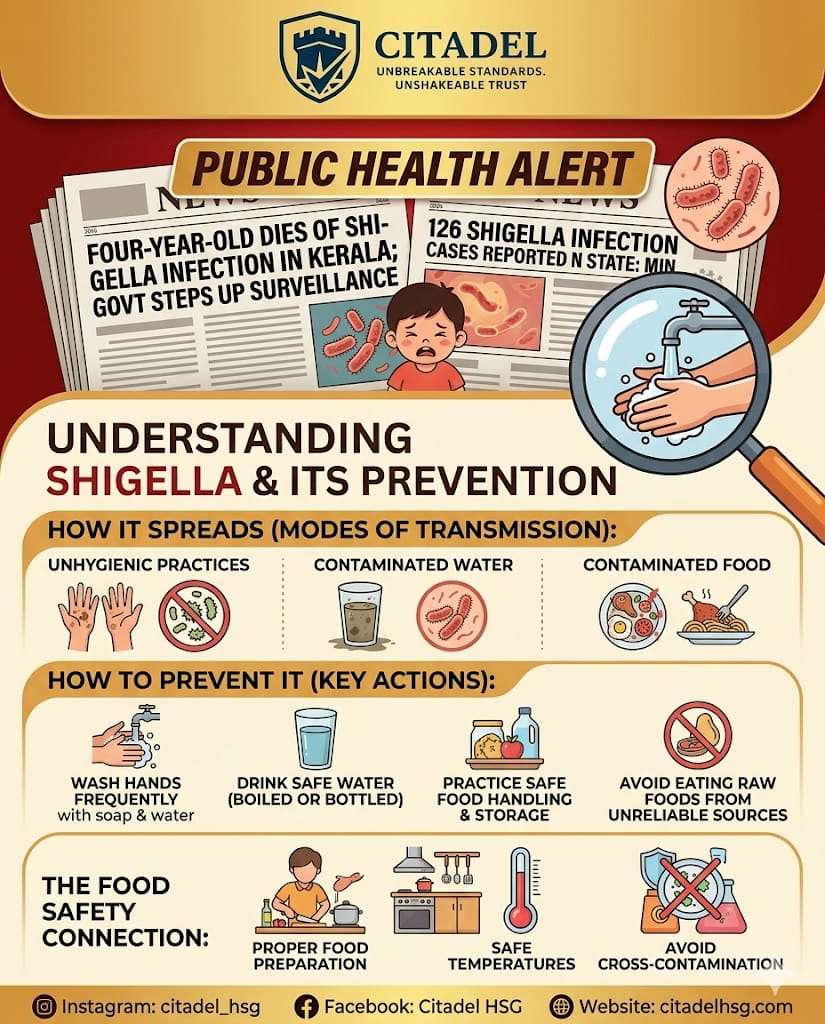
A Shigella infection (shigellosis) is a highly contagious intestinal disease caused by the Shigella bacterium. It is transmitted via the fecal-oral route through contaminated food, water, or direct person-to-person contact. Common symptoms include severe stomach cramps, fever, and watery or bloody diarrhea.
1. Symptoms
Signs of the infection typically appear 1 to 3 days after exposure and generally last for 5 to 7 days:
- Diarrhea: Often bloody, containing mucus or pus.
- Abdominal Pain: Severe stomach cramps or tenderness.
- Fever: High temperatures often exceeding 38°C (100.4°F).
- Tenesmus: A painful, continual feeling of the need to pass stool, even when the bowels are empty.
2. How It Spreads
Shigella is incredibly virulent; ingesting as few as 10 to 100 bacteria is enough to cause illness. It spreads through:
- Direct Contact: Touching surfaces or having close contact with an infected person (or changing soiled diapers) and touching your mouth.
- Contaminated Food or Water: Eating food prepared by an infected person who did not wash their hands properly, or drinking water contaminated by feces.
- Sexual Activity: It can be easily transmitted during sexual acts that involve contact with feces, such as oral-anal contact.
3. At-Risk Groups
While anyone can get shigellosis, it is most common in:
- Children under 5 years old (especially in childcare settings).
- Men who have sex with men.
- Individuals living in or traveling to areas with poor sanitation.
- People with weakened immune systems (e.g., those living with HIV or undergoing chemotherapy).
4. Diagnosis and Treatment
Doctors usually diagnose shigellosis by testing a stool sample in a laboratory.
- Home Care: Most mild cases resolve on their own. The primary treatment is to prevent dehydration by drinking plenty of fluids or using oral rehydration solutions. Avoid taking over-the-counter anti-diarrheal medications without consulting a healthcare provider, as they can sometimes make the infection worse.
- Antibiotics: In severe cases, particularly for young children, the elderly, or those with compromised immunity, doctors may prescribe antibiotics (such as azithromycin or ciprofloxacin) to shorten the duration of the illness.
5. Potential Complications
Though most people recover fully, severe cases can lead to dangerous complications:
- Severe Dehydration: Fluid loss requiring hospitalization.
- Reactive Arthritis: Joint pain and swelling that can occur weeks after the initial infection.
- Bloodstream Infections: Bacteria entering the bloodstream, which is more common in young children and immunocompromised individuals.
- Seizures: High fevers can rarely trigger seizures, primarily in children under 2.
6. Prevention
You can drastically reduce your risk of contracting or spreading the infection by following these guidelines:
- Wash Your Hands Thoroughly: Use soap and scrub for at least 20 seconds, especially after using the bathroom, changing diapers, or before eating or preparing food.
- Follow Food and Water Safety: Only drink bottled or properly boiled water in areas with questionable sanitation. Wash all fruits and vegetables before consuming.
- Practice Safe Sex: Use condoms during anal sex and dental dams for rimming to avoid direct exposure to feces.
- Isolate When Sick: Do not prepare food for others or use public swimming pools until you have been symptom-free for at least 48 hours.