The Core Difference
The absolute fundamental difference lies in their scope and nature:
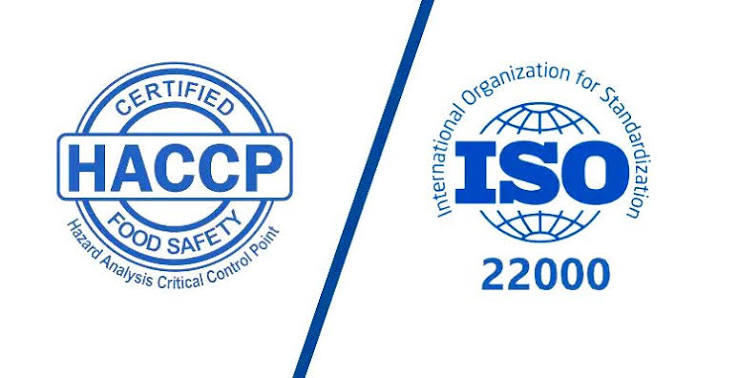
- HACCP (Hazard Analysis Critical Control Point) is a specific operational tool focused purely on food safety hazards.
- ISO 22000 is a complete corporate management system that wraps around HACCP.
Think of HACCP as the engine of a car (the core mechanism that drives food safety) and ISO 22000 as the entire vehicle (the engine plus the steering, dashboard, safety features, and driver guidelines).
Detailed Comparison Points
1. Structure and Framework
- HACCP: Built upon 7 principles and 12 implementation steps developed by Codex Alimentarius. It does not follow a corporate management structure.
- ISO 22000: Uses the High-Level Structure (HLS) common to all modern ISO standards (like ISO 9001 for quality and ISO 14001 for environment). It is divided into 10 clauses, making it easy to integrate with other business standards.
2. Focus on Continual Improvement
- HACCP: Reactive and proactive regarding hazards, but focuses primarily on keeping a process within safe limits.
- ISO 22000: Driven by the PDCA (Plan-Do-Check-Act) cycle. It forces a business to constantly review, update, and improve the entire food safety system based on data, market trends, and errors.
3. Management and Leadership
- HACCP: Usually managed and maintained by a technical "HACCP Team" (quality assurance managers and food scientists) on the factory floor.
- ISO 22000: Requires Top Management commitment. Executives must explicitly define food safety policies, assign resources, conduct formal management reviews, and take ultimate responsibility.
4. Hazard Control Categories
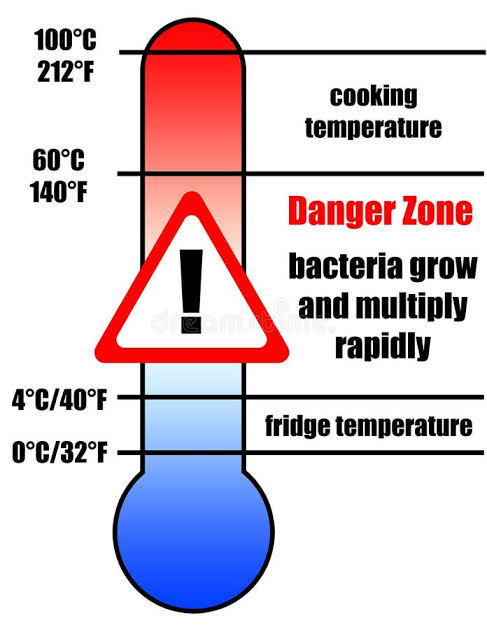
- HACCP: Controls safety using Critical Control Points (CCPs)—operational steps where a hazard must be prevented, eliminated, or reduced to a safe level (e.g., cooking temperature).
- ISO 22000: Introduces a middle layer. It controls hazards using PRPs (Prerequisite Programs like basic hygiene), OPRPs (Operational Prerequisite Programs), and CCPs. OPRPs are used when a hazard is significant, but a strict numeric "critical limit" cannot be easily measured.
5. Supply Chain and Communication
- HACCP: Focuses internally on what happens inside the four walls of the processing facility.
- ISO 22000: Mandates formal Interactive Communication. The business must prove it communicates effectively with upstream suppliers, downstream customers, and food safety authorities.
6. Certification and Recognition
- HACCP: Certification is usually done by local third-party bodies or required by local legislation. It is a baseline legal requirement in many nations.
- ISO 22000: An internationally recognized standard. Certification is globally uniform.
ISO 22000 by itself is not benchmarked by the Global Food Safety Initiative (GFSI), but FSSC 22000 (which adds specific requirements to ISO 22000) is GFSI-recognized.